
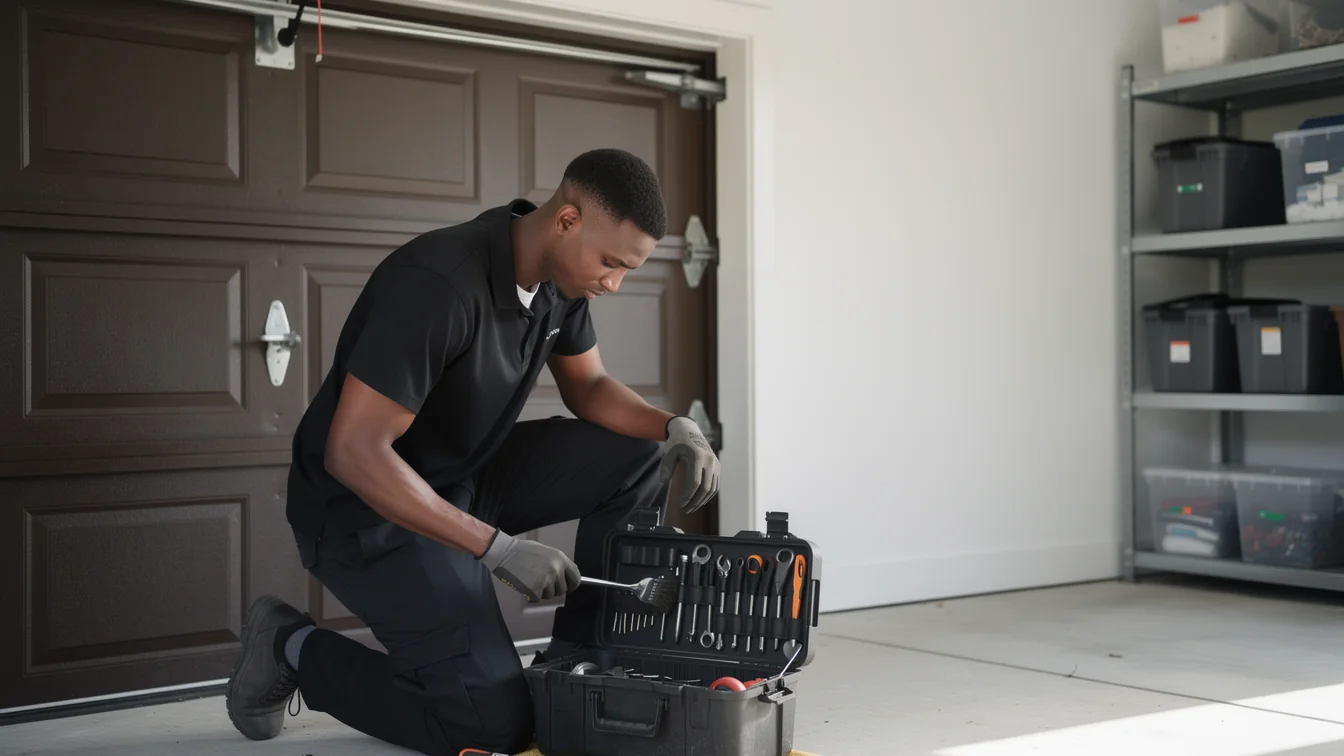
What Actually Happens When We Come Out for a Service Call
A look at what a garage door service call actually checks on Fredericksburg houses built between 1973 and 2001, and why the local climate changes what matters.
Read moreBlogFredericksburg, VA · 5 min read
Fredericksburg homes built mostly between 1973 and 2001 run openers that weren't built for today's power blips. Here's what local winters and that housing stock mean for your door.
Local detail
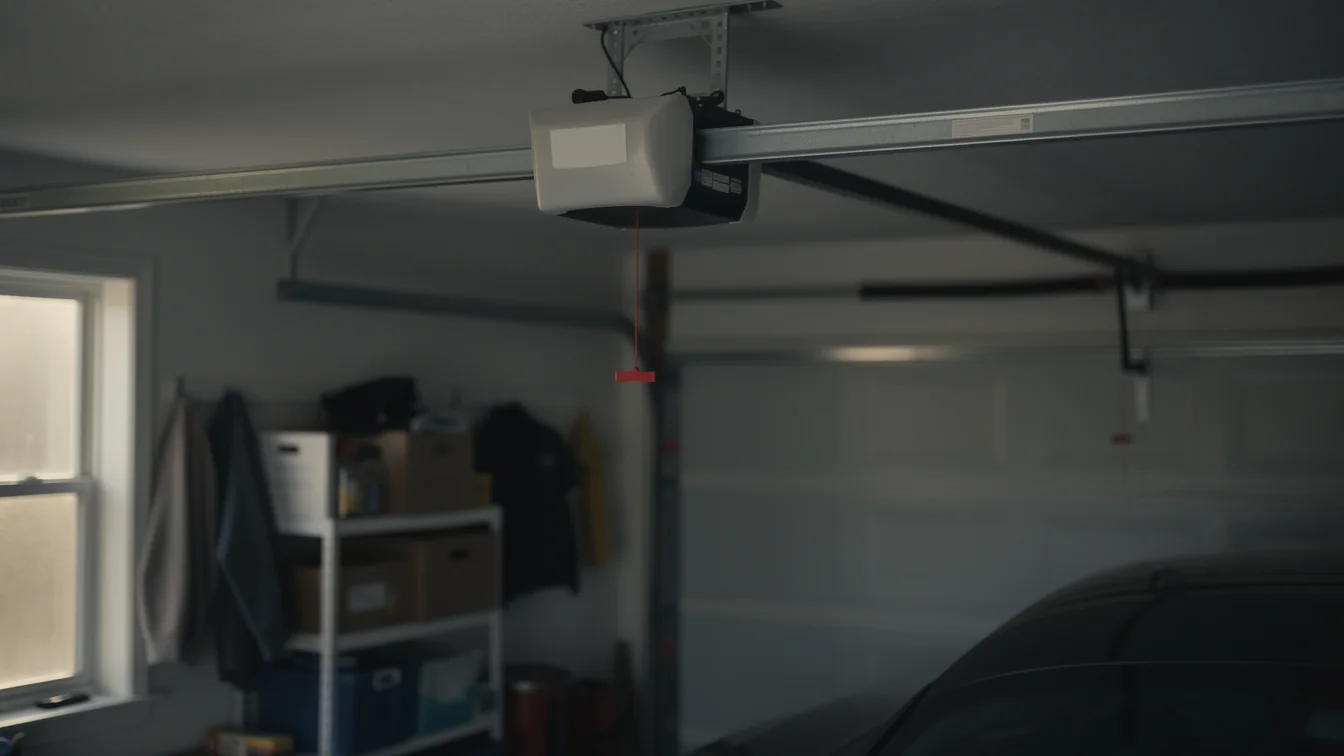
A garage door opener that struggles after a power cut isn't a problem that fixes itself with time. If your opener loses its memory of the door's travel limits every time the power blinks, that's usually a logic board or a backup battery on its way out, not a settings issue you can nudge back into place. Keep resetting it manually and you're masking a part that's failing, not solving anything.
In houses built across Fredericksburg's 1973-2001 wave, a lot of openers are original to a prior remodel, not the house itself, which means the board inside may be older than the door it's running. Ignoring a unit that resets itself after every outage usually ends one of two ways: it stops closing all the way and you don't notice until a storm, or the motor burns out trying to force a door that's drifted out of alignment. Neither is cheap to catch late.
We're not going to tell you every flicker means a service call. A quick blink that the opener shakes off on its own is normal. What's not normal is a door that needs you to hold the wall button the whole way down, or a remote that only half-works since the last cut. That's wear, and it's worth a look before it decides the time for you.
The area
Fredericksburg sits in a cold-moderate climate band, which means winter mornings cold enough to stiffen grease in an opener's gearing, paired with summers humid enough to swell wood jambs and throw off a door's travel limits twice a year. Openers don't love either extreme, and a unit already weak from age shows it first after a cold snap or the first hot, sticky week.
Power cuts matter more here than in a mild climate because a cold-soaked motor draws more current to get moving again once power returns. If your opener's capacitor is already tired, that extra draw after an outage is often what finishes it off. You'll notice a door that used to close in under ten seconds now takes visibly longer, or grinds before it catches.
Battery backup units, where installed, also lose capacity faster in cold. A backup that held the door through a short outage last winter might not make it through one this winter if it's a few years in. None of this is unique dramatic weather - it's ordinary cold-moderate cycling, the kind that wears parts down steadily rather than all at once. That steady wear is exactly what gets missed, because nothing looks broken until the day it is.
What we find
Most of the housing stock across the service area went up between 1973 and 2001, with the heaviest concentration in the 1980s and 90s across the six areas that make up this part of town. That matters for openers specifically: a chain-drive unit installed when a house was built in, say, 1988 is well past any reasonable service life, and a lot of those original units are still running on the same board that came with the house.
With 7,279 owner-occupied houses in a service area of 11,967 households, there's a real mix of original builders'-grade openers next to newer replacements from a prior repair. The giveaway is usually the travel-limit behavior after a power cut - older boards from that era often don't hold their memory the way current units do, so they need a manual reset every single time, not just occasionally.
If your house falls in that 1980s-90s band and the opener has never been swapped, the unit predates a lot of the safety-reversal standards built into current models. That's not a scare tactic, it's just a fact of the part's age. We don't push replacement on every older opener we see - plenty still run fine - but one that resets badly after every outage is telling you something about its own wiring, not just the power grid.
How we work
Start with the obvious: after a power cut, does the door fully reverse off the floor sensor, or does it hesitate? That hesitation is the first sign of a board losing its grip on calibration, and it tends to show up worse in the cold-moderate swings this area gets.
Check the backup battery date if your unit has one - most lose real capacity after a few winters here, and a backup that's quietly dead doesn't announce itself until the power's actually out. Listen for grinding on the first open after an outage; that's the motor working harder than it should against stiff, cold gearing.
If your house is in that 1973-2001 band and the opener looks original, pull the model sticker and note the year if you can find one. A unit from the early end of that range is well past the point where parts are easy to source, and at that age, a repair call is often just delaying a replacement you'll need anyway. We won't talk you into replacing something that's working. But if it's resetting every time the power blinks, that's not a quirk, that's the part asking to be looked at.
Questions
On older boards, especially ones from houses built in the 1980s and 90s here, the memory for travel limits isn't held through a power loss the way newer units do it. Each outage forces a manual reset. If that's happening every time, the board itself is usually the issue, not just the outage.
It's real. In a cold-moderate climate like Fredericksburg's, grease in the opener's gearing stiffens in winter, making the motor work harder on cold starts - which is exactly when it also has to recover from any overnight power blip. That combination wears weak units out faster.
Check the model sticker inside the housing for a date code. If your house falls in the 1973-2001 range common across this area and the sticker matches close to that, it's likely original and well past typical service life, even if it still runs.
If it's a few winters old, test it under an actual outage rather than assuming. Backup batteries lose capacity faster in cold-moderate cycling, and a backup that worked fine last year can fail silently by this one.
Recommendation
More garage door guides for Fredericksburg homeowners.
A look at what a garage door service call actually checks on Fredericksburg houses built between 1973 and 2001, and why the local climate changes what matters.
Read more
A look at when a garage door built during Fredericksburg's 1973-2001 construction boom is worth repairing versus replacing, based on local housing stock and climate.
Read more
Most Fredericksburg garage doors went up between 1973 and 2001.
Read moreReady when you are
Fredericksburg Garage Door Pros repairs and installs garage doors, springs and openers in Fredericksburg, VA and the surrounding area.