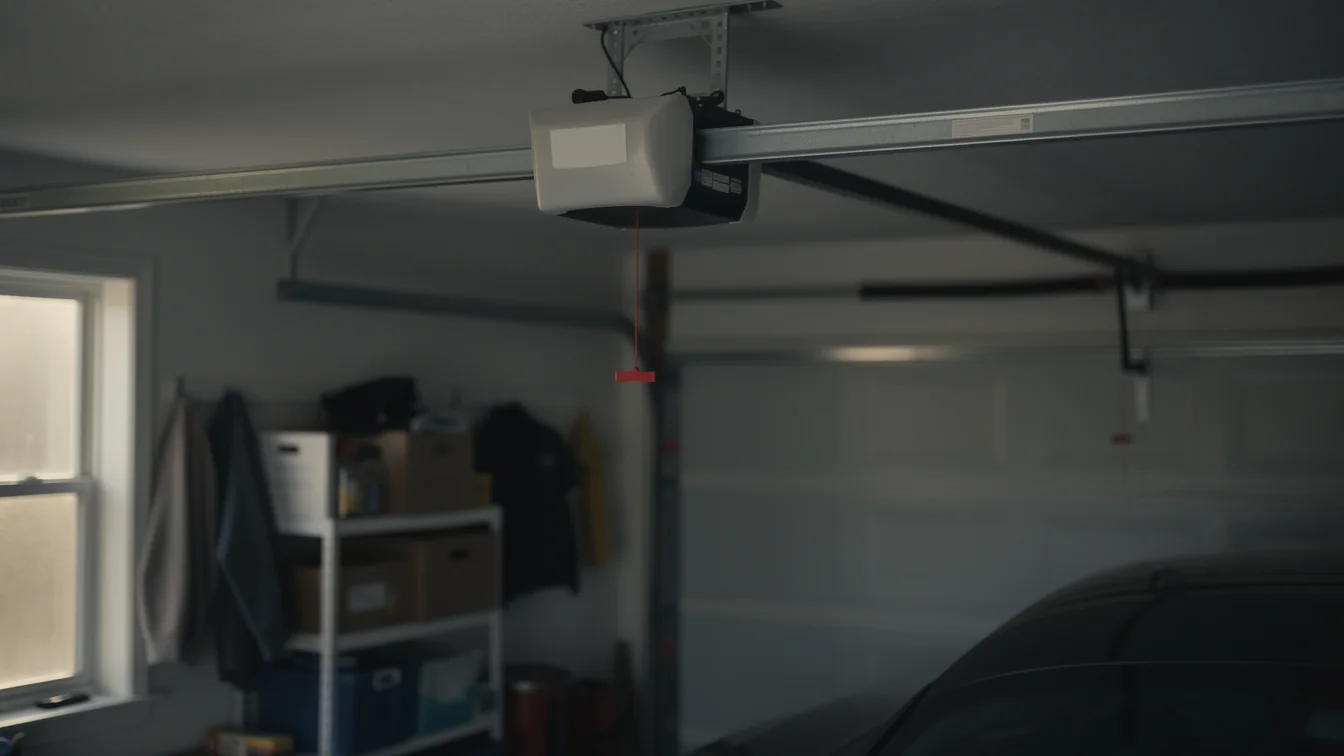
When the Power Goes Out, Your Opener Doesn't Know What Year It Is
Fredericksburg homes built mostly between 1973 and 2001 run openers that weren't built for today's power blips.
Read moreBlogFredericksburg, VA · 4 min read
A look at when a garage door built during Fredericksburg's 1973-2001 construction boom is worth repairing versus replacing, based on local housing stock and climate.
Local detail
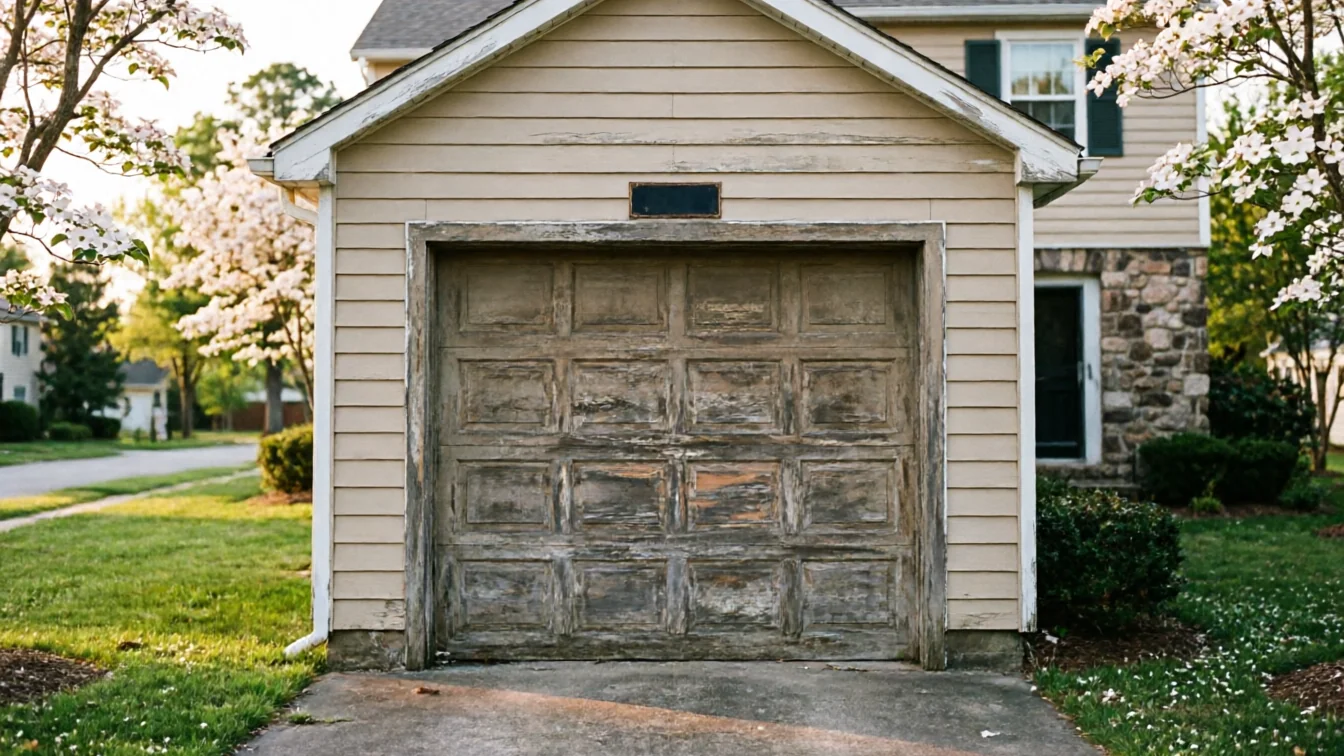
Most of the houses we work on around Fredericksburg went up somewhere between 1973 and 2001, with the median landing around 1991. That's a wide window, and it matters because a door from the early end of that range is a different animal than one from the late end. A 1970s door usually has a lighter steel skin, a different spring mount, and hinges that have taken thirty-plus years of seasonal swings. A 1990s door is often still structurally sound even if the opener has quit twice.
Leaving an old door alone isn't laziness - sometimes it's the right call. If the panels are straight, the track is clean, and the only complaint is noise, you don't need a new door. You need lubrication and maybe a roller swap. The mistake we see is treating every creak as a sign the whole unit is dying. It usually isn't. What it usually is, is thirty years of dust and dried grease finally making themselves heard.
The area
Fredericksburg sits in a cold-moderate climate band, which means doors here deal with real freeze-thaw cycles but not the brutal extremes you'd get further north or the constant damp of a coastal town. That matters for a door built in the 1980s or 90s: the steel doesn't rust through the way it would in a wetter climate, but the hardware - springs, cables, hinges - fatigues from repeated contraction and expansion through winter.
On a door that old, the spring has usually outlived its rated cycle count regardless of climate, but cold moderate conditions speed up the brittleness in cheaper springs from that era. Torsion springs manufactured before the mid-90s tend to be undersized by today's standard, which shows up as a door that feels heavy to lift by hand in January but fine in July. That seasonal difference, on a door this old, is a sign the spring is near the end, not a sign something is broken.
What we find
Across the areas we cover - Falmouth two miles out, Spotsylvania Courthouse at nine, Aquia Harbour at twelve, King George at sixteen, Bowling Green and Triangle both around nineteen - the housing stock runs mostly 1980s and 90s construction. That consistency actually makes this easier to call: most of what we see is the same generation of door, with the same generation of failure points.
With roughly 7,279 owner-occupied houses across this service area and a median household income near $103,644, we see a lot of homeowners who could afford full replacement but choose repair first - and for a door from this era, that's often the financially sound choice. The frame and track on a well-built 1980s or 90s door usually still has life in it. The question isn't age alone, it's which parts have actually failed.
How we work
Before you decide repair or replace, look at three things. First, the panels - dents you can live with, but a bowed or cracked panel on a steel door this old means the door is losing structural rigidity and a patch job won't hold. Second, the spring - if it's original to a door built before the mid-90s, it's past its rated life regardless of how it looks. Third, the track and rollers - surface rust is cosmetic, but rollers that have worn grooves into the track mean the door is riding rough and stressing the opener.
Here's the honest limit: if two of these three are bad at once, we'll usually tell you to replace rather than repair, because stacking new parts onto an old frame stops making financial sense. One bad part, we fix it and send you on your way. Two or three, the math changes.
Questions
If your house was built in the window most Fredericksburg-area homes were - the 1970s through early 2000s, median around 1991 - and the door has never been replaced, check the manufacture sticker on the inside of the top panel. No sticker, or a date before the mid-90s, usually means original hardware that's well past its service life.
The cold-moderate climate here means real freeze-thaw cycles each winter, which fatigues springs and hinges faster than a milder climate would, though not as fast as a harsher one. On a door already decades old, that seasonal stress is usually what finally pushes a worn spring past the point of holding.
It depends on how many parts have failed. A single bad spring or a damaged panel on an otherwise sound 1980s or 90s door is almost always cheaper to repair. Once the frame, track, and spring are all failing together, repair costs start to approach replacement, and replacement becomes the better value.
Recommendation
More garage door guides for Fredericksburg homeowners.
Fredericksburg homes built mostly between 1973 and 2001 run openers that weren't built for today's power blips.
Read more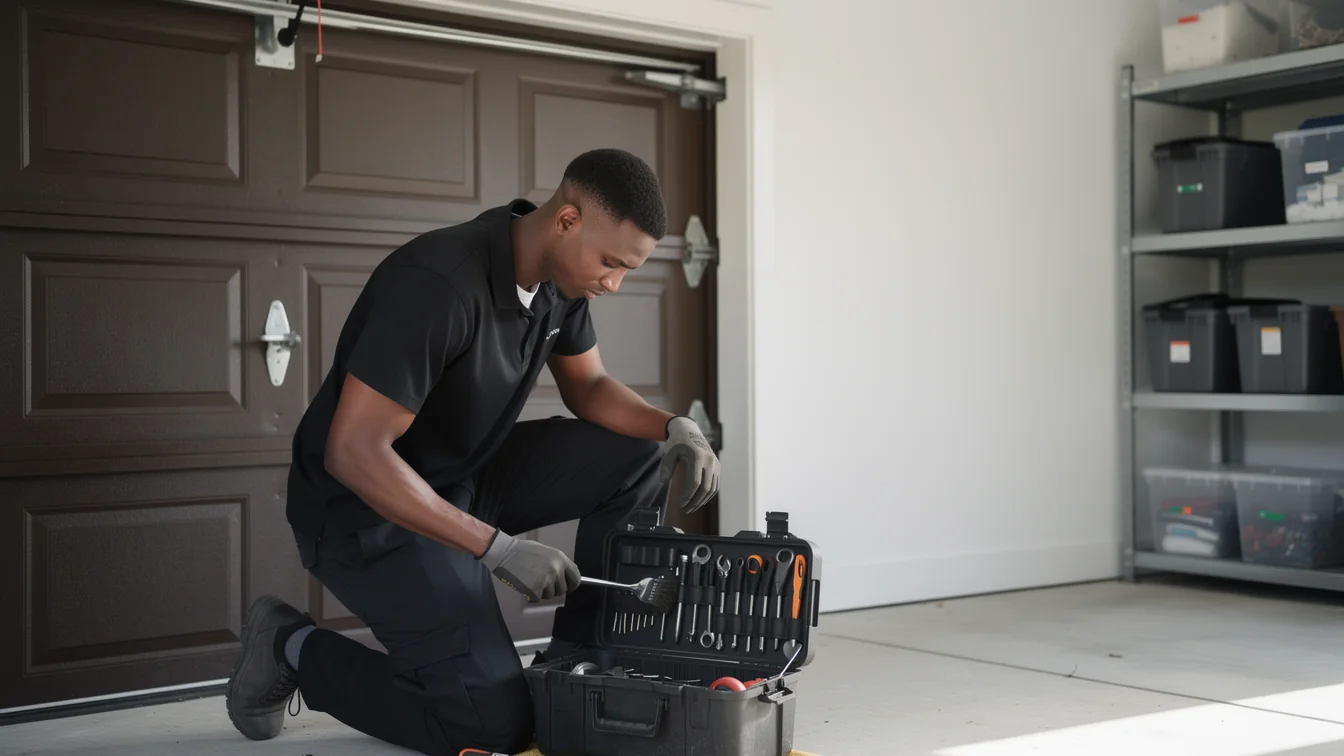
A look at what a garage door service call actually checks on Fredericksburg houses built between 1973 and 2001, and why the local climate changes what matters.
Read more
Most Fredericksburg garage doors went up between 1973 and 2001.
Read moreReady when you are
Fredericksburg Garage Door Pros repairs and installs garage doors, springs and openers in Fredericksburg, VA and the surrounding area.